
From EAU26 to your clinic: ESU courses and Hands-on training to fit your goals
The EAU Annual Congress is more than an update on the latest urological developments — it is an opportunity to strengthen your knowledge and skills actively. To support this, the European School of Urology (ESU) is introducing new additions to its well-established courses and Hands-on Training (HOT) so you can bring crucial information back to your practice.
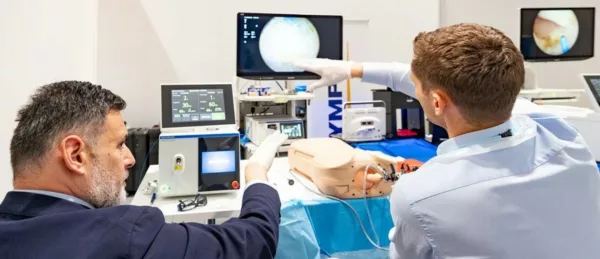
ESU offers a myriad of courses and HOTs to suit your needs. From practical strategies for focal therapy, knowledge of duplication pathologies in children, confident use of AI, to effective post-surgical infection management, and more, there is a course to match your focus.
New courses you can explore
Friday, 13 March 2026
- ESU Course 08 Ultrasound in Urology: From basics to proficiency
Know more about ultrasound (US) imaging and interpretation. Avoid common pitfalls and confidently use US in both outpatient and emergency settings.
- ESU Course 09: Focal therapy for beginners: How to start with focal therapy
Learn MRI-based lesion targeting, patient preparation, and hands-on steps for transperineal and transrectal focal therapy.
- ESU Course 15 2026 EAU Guidelines update – Trauma, paediatric urology and urethral strictures: What has changed
Get the latest updates in urological trauma, paediatric urology, and urethral strictures. Learn evolving minimally invasive approaches to trauma, practical strategies for managing enuresis, and when (and when not) to use drug-coated balloon dilatation for urethral strictures.
Saturday, 14 March 2026
- ESU Course 16 Artificial Intelligence 1 - Basic
Learn the key terminology and discover how to use AI tools effectively and responsibly. Explore how AI can be applied in your daily work through hands-on examples, prompting exercises, and practical cheat sheets.
- ESU Course 23 Artificial Intelligence 2 - Advanced
Go deeper into Big Data management, AI-ready datasets, data harmonisation, and emerging AI trends. Explore challenges such as data imbalance and multimodality (video, imaging, audio, tabular).
- ESU Course 17 Post-surgical infections in urology – prevention and management
Get a practical overview of peri-operative infections in modern urology. Learn the current guidelines on the prevention, rational antibiotic use, and early recognition of complications. Case discussions cover common scenarios, severe infections such as urosepsis, and management of prosthetic material or multidrug-resistant pathogens.
- ESU Course 24 A to Z of recurrent urinary tract infections (UTIs)
Identify risk factors, explore non-antimicrobial measures, and review the evidence for various therapies, including topical oestrogen, cranberry extract, D-mannose, probiotics, and intravesical instillations.
- ESU Course 29 Planning, designing and executing randomised clinical trials in urology
Learn to formulate research questions, design actionable trials, choose outcome measures, and navigate protocol writing and trial activation.
Sunday, 15 March 2026
- ESU Course 31 Comprehensive management of muscle-invasive bladder cancer
Stay current on MIBC diagnostics and staging, including advanced imaging and pathological assessment. Review current and emerging treatment strategies, from neoadjuvant therapy and surgery to bladder-sparing options, and adjuvant or palliative systemic treatments. Apply the latest evidence to guide decisions in both localised and metastatic disease (e.g., oligometastatic management and follow-up).
- ESU Course 39 Transgender surgery course
Explore key feminising and masculinising genital gender-affirming surgeries (gGAS), including common complications and how to manage them. Learn how urologists can provide optimal care, and understand the organisational features of successful trans-surgery programmes.
Monday, 16 March 2026
- ESU Course 46 Advanced indications in robotic reconstructive surgery
Discover how the latest robotic technologies enable minimally invasive reconstruction of the lower and upper urinary tract with excellent functional outcomes. Learn techniques that reduce the need for repeat open surgeries and improve patient recovery.
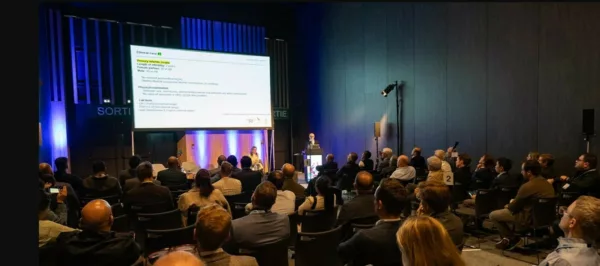
From theory to practice
Choose from this array of HOT courses and learn by doing:
A. Diagnostics and follow-up
- Urological ultrasound (days 1 and 2)
Equip yourself with the necessary baseline training to implement abdominal ultrasound as well as transrectal ultrasound of the prostate as a routine diagnostic tool in your practice.
- TP Biopsy and MRI Fusion (days 1 and 2)
Get an overview of office-based transperineal (TP) biopsy under local anaesthesia. Practice probe handling, anaesthesia administration, targeting, and biopsy execution, and explore MRI fusion integration in clinical practice.
- Prostate MRI reading for urologists (days 1, 2, and 3)
Gain insights from the experts in prostate MRI reading and interpretation. Further understand the role MRI plays in the management of patients with prostate cancer and how to use the information generated by prostate MRI.
- PSMA/PET Image Reading for Urologists
Know how prostate PET imaging works, what different tracers might be used for prostate cancer, and how to use the information generated by PET. The course will cover initial staging, staging at recurrence, and the use of PET imaging for radioligand treatment.
B. Endoscopy
- Transurethral treatment – Step 2 (TURBT) (days 1, 2, and 3)
Gain the fundamentals of transurethral resection of the bladder and enhance your skills. This course is specifically tailored for urologists who
want to improve their proficiency in resection techniques.
- Transurethral treatment – Step 2 (TURP) (days 1, 2, and 3)
This is the second step in the Transurethral Treatment (TUT) curriculum. It is designed to provide you with a fundamental understanding of transurethral resection of the prostate and enhance your skills.
- Transurethral treatment – Step 3 (ThuLEP) (days 1, 2, and 3)
Develop your proficiency in the use of thulium laser enucleation of the prostate (ThuLEP). Build familiarity with the procedural workflow, boost your confidence in handling laser and endoscopic equipment, and know the best practices, safety considerations, and operative efficiency.
- ESTs1 exam
In this exam, your psychomotor and endoscopic skills are assessed, with a focus on the safe and effective performance of core endourological procedures, such as rigid cystoscopy, flexible cystoscopy, semi-rigid ureteroscopy, and flexible ureteroscopy.
- Endoscopic stone treatment - Step 1 (days 1 and 2)
Gain a basic level of knowledge in endoscopy and improve your proficiency in key techniques for endoscopic stone management. The curriculum includes four key exercises on flexible cystoscopy, rigid cystoscopy, semi-rigid ureteroscopy, and flexible ureteroscopy.
- Temporarily Implanted Nitinol Device (iTind) (days 1 and 2)
Utilising advanced anatomical models that accurately replicate human anatomy, you will gain hands-on experience on the entire iTind implantation process, from insertion to removal.
C. Functional Urology
- Botulinum Toxin Injection
This is a procedure-focused course that teaches the practical aspects of intradetrusor onabotulinumtoxin-A administration through hands-on training using bladder models. Participants will learn safe reconstitution, injection techniques, and the use of flexible and rigid cystoscopic equipment.
- Sacral Neuromodulation (SNM)
Practice each step of the SNM procedure, including primary percutaneous nerve evaluation, tined lead and battery implantation, programming, and troubleshooting.
- Urodynamics
Familiarise yourself with the essential principles of urodynamic testing through practical exercises in catheter placement, pressure-flow studies, and data interpretation using simulation tools and urodynamic equipment.
D. Laparoscopy
- Laparoscopic urological skills – Step 1 (days 1 and 2)
Gain a basic level of knowledge in laparoscopy and improve your proficiency in key laparoscopic techniques. The course comprises four essential exercises to hone skills related to depth perception and bimanual dexterity: peg transfer, circle cut, needle guidance, and knot tying.
- Laparoscopic urological skills - Step 2 (days 1, 2, and 3)
Using state-of-the-art models, expert surgeons will teach you essential techniques for repairing major vessel injury, performing VU anastomosis, and conducting partial nephrectomy.
- E-BLUS exam
This exam will evaluate your psychomotor skills (depth perception and bimanual dexterity) and your mastery of basic laparoscopy skills (instrument handling, pattern cutting and intracorporeal suturing).
E. Transplantation
- Kidney transplantation surgery
Understand key principles of open kidney transplant (KT) and advanced techniques, including vascular anastomoses and graft handling. Gain proficiency in bench surgery, essential anastomosis procedures, vein enlargement, and more. - Intermediate Laparoscopic Training (LUSs2 days 1, 2, and 3)
Enhance skills in intricate laparoscopic procedures, with expert guidance on vessel injury repair, pyeloplasty, and partial nephrectomy.
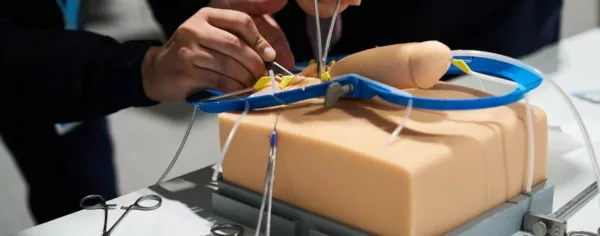
How to sign up for the courses and HOTs
To secure your spot, you need to add the ESU courses and/or HOTs to your registration. Here's how:
1. If you haven’t registered for EAU26 yet, you can add the ESU courses and/or HOTs in the “Extras” step on the registration page.
2. Already registered? You can add the ESU courses and/or HOTs using the personal link under “Book extras” on your e-ticket. The e-ticket is sent within 1 or 2 workdays after you complete the online registration.