
“Check your balls”: Why waiting for pain is a man’s biggest mistake
This April, the annual men’s health initiative “Check Your Balls” launched in Lithuania. Organised by the Lithuanian Society of Urology in partnership with this year’s collaborator (the Lithuanian Paralympic Committee), the campaign addresses a grim reality. Despite increasing public information about oncological diseases, statistics remain unforgiving: more than half of patients visit a urologist for the first time only when the disease is already advanced.
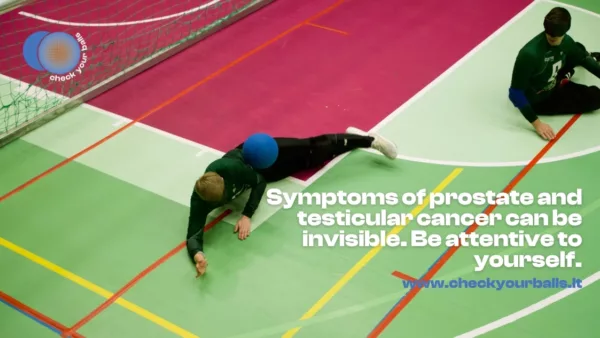
The primary reason remains a deeply rooted belief that health only becomes relevant when severe symptoms appear. This mindset is particularly dangerous in oncology, as both prostate and testicular cancer can be asymptomatic in their early stages.
A cognitive error that costs lives
Dr. Marius Kinčius, Head of the Lithuanian Society of Urology, observes that men frequently make the same mistake: seeking medical help only when pain becomes unbearable. The greatest threat to health is not just the disease itself, but the conviction that as long as you feel nothing, you are healthy. This "if it doesn't hurt, I'm fine" logic is deceptive.
"According to the European Association of Urology (EAU), more than 50% of men visit a urologist for the first time with advanced disease," says Dr. Kinčius. "As a specialist with over 15 years of experience, I encounter this daily. This avoidance isn't just 'masculine character' - it’s a deeply ingrained pattern of ignoring symptoms and denying prevention. It leads directly to late diagnoses and preventable deaths."
Dr. Kinčius emphasises that health should not be a reaction to pain. "Prevention is the rational choice of a mature man. It allows for simpler treatment and the ability to control the disease while ensuring a high quality of life." According to him, delays are usually fueled by stereotypes that "real men don't complain," a psychological fear of bad news, and a perceived lack of time in a fast-paced life.
Partnerships creating change
This year’s campaign features the Lithuanian Paralympic Committee, where Paralympic sport serves as a metaphor for strength. Paralympic athletes possess extraordinary discipline and an acute ability to "listen" to their bodies.
The campaign's visuals focus on two sports: shot put and goalball. Shot put represents physical power and control, reminding us that even small internal changes affect the final result. Goalball, played with eyes covered, relies on sensory sensitivity - the ability to "hear" what is happening within.
"As an athlete and a leader, I joined 'Check Your Balls' because I believe everyone has a duty to care for themselves," says Mindaugas Bilius, President of the Lithuanian Paralympic Committee and Paralympic champion. "In professional sports, we are trained to listen to our bodies differently. Every minor warning signal can jeopardise the result. I want to pass this experience to all men: in life, as in sports, a healthy body is the primary path to success."
Dr. Kinčius adds that this partnership gives the campaign new depth: "When a young man hears a doctor, he might perceive it as a lecture. But when professional athletes share this message, it is ten times more powerful. True strength is not suppressed pain or ignored symptoms; it is knowing your body and taking responsibility before anything hurts."
Concrete habits and the “30-second rule”
To manage oncological risks, Dr. Kinčius highlights key lifestyle principles: regular physical activity (at least 150 minutes per week), a plant-based diet, and avoiding harmful habits, especially smoking. For young men - the primary risk group for testicular cancer - he offers a very specific "30-second rule."
"Young men respond to messages that are concrete, masculine, and free of shame," says the urologist. "The rule is simple: in the shower, run your thumb and forefinger over both testicles - look for hard lumps or differences between them. No long lectures. Just one specific action and a daily habit. Testicular cancer caught early has a 98% cure rate and no impact on potency or fertility."
Health awareness is masculine
According to National Cancer Center registry data, Lithuania sees an average of 3,000 new prostate cancer cases and up to 50 testicular cancer cases annually. Specialists urge men to perform a simple self-examination once a month and for those over 50 (or 45 if there is a family history) to regularly undergo PSA blood testing.
The organisers of "Check Your Balls" hope that open dialogue will reduce the stigma of the urologist's office and normalise conversations about male reproductive health. The goal is to turn regular health checks into a lifelong habit, regardless of whether the body is sending distress signals or not.