
ESU Course in Tajikistan delivers modern treatment modalities in urolithiasis
On 31 October 2025, as part of the 73rd Annual Conference of Tajik State Medical University (named after Abuali ibn Sino), we co-organised a virtual course together with the European School of Urology (ESU). Urologists and clinical residents from Dushanbe, Tajikistan, as well as urologists from various regions of our country, attended the course “Modern treatment modalities of urolithiasis”. An online broadcast of the course with simultaneous translation into Russian was also organised for urologists from the Sughd region. The course programme covered a myriad of topics and included lectures by speakers from the ESU.
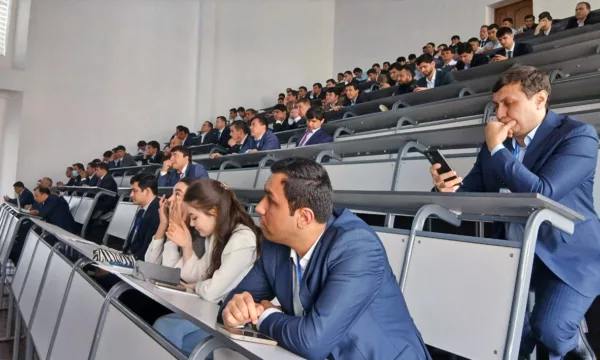
The first lecture was by Prof. Andreas Skolarikos (GR), “European School of Urology: A unique possibility for urological education.” He discussed how the ESU can help urologists acquire various types of education without leaving their home country, how one can join the ESU,, and what additional opportunities do they have by joining this society.
Prof. Skolarikos also presented the second lecture, which was about the EAU Guidelines recommendations on the treatment of urolithiasis. He discussed the new recommendations, as well as emphasis on antibiotic prophylaxis before urological procedures, the placement of drainage after the PCNL procedure, and the internal stent after the urethroscopy procedure, to name a few.
Prof. Laurian Dragos (GB) discussed the ureteroscopy (URS) setup and the role of suction technologies in stone treatment. He explored rigid and flexible URS devices, along with the characteristics of each and their advantages during the procedure. Prof. Dragos also talked about the new generations of flexible ureteroscopes and their disposable device variants. He discussed the role of suction technologies in the treatment of stone during lithotripsy, effectiveness in stone removal, regulation of intrarenal pressure, and the temperature within the renal cavity system.
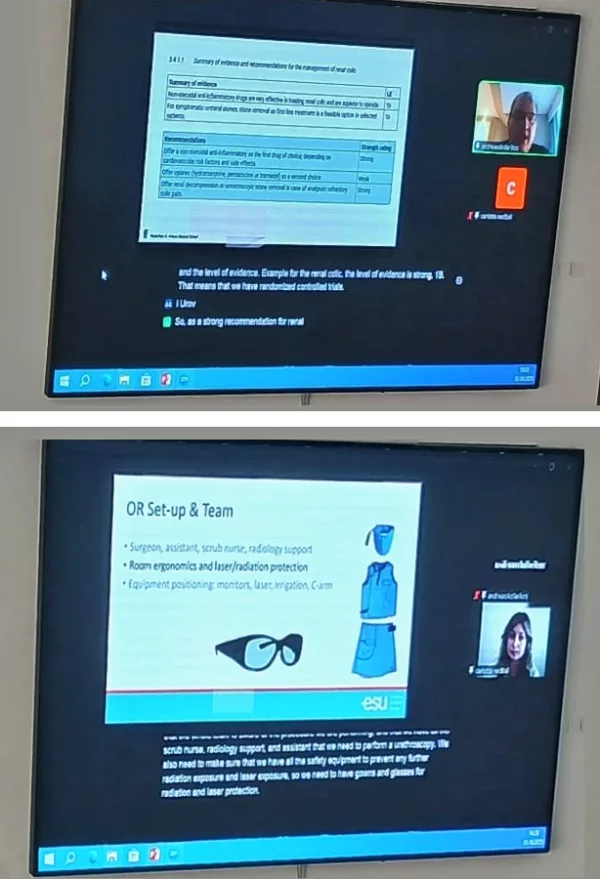
The next presentation was by Prof. Skolarikos, which was about percutaneous nephrolithotomy (PCNL). Various primary access options using fluoroscopy were reported, including triangulation and bull's-eye techniques. Particular emphasis was placed on the use of ultrasound during primary punctures as a safe method in terms of damage to the organs surrounding the kidney.
Dr. Begoña Ballesta Martinez (ES) then discussed fragmentation devices in URS and PCNL. Her lecture covered the history and generations of laser technology, as well as the fragmentation effect that occurs when using different laser forms and generations. Particular emphasis was placed on the use of MOSES technology in the treatment of stones during URS and PCNL, as well as its advantages: reduction of the retropulsion effect, increased efficiency, and enhanced safety during procedures.
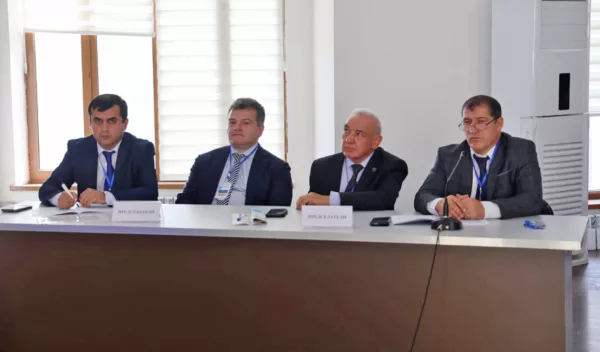
On the ureteroscopic treatment of stone and its complications, Prof. Dragos shared current developments and his expertise. He presented various URS cases and their potential complications. The audience asked him about the mechanisms by which these complications develop and their management options. There were also comments about the development of serious complications, such as complete ureteral avulsion, in their practice.
The following presentation was by Dr. Ballesta Martinez, who provided important updates on PCNL and its complications. This topic was of particular interest to physicians because of the interesting and unusual cases presented. A particularly interesting case involved a calcified aneurysm of a renal vessel simulating a renal pelvis stone. It was emphasised in terms of diagnosing patients, conducting computed tomography before performing the PCNL procedure. Another interesting case involved placement of a nephrostomy tube tip into the inferior vena cava.
The course programme was interesting. It provided a wealth of new and useful information about innovations in modern urology. Particularly interesting topics included complications of URS and PCNL, where the speakers presented case studies and their complications. The course included questions, discussions, and comments from urologists and speakers. At the end of the course, all participants received an ESU course certificate.