
More than urology: Residents take us inside EUREP26
For two decades, the European Urology Residents Education Programme (EUREP) has grown in popularity in the urological community. So what makes the programme stand out from the rest?
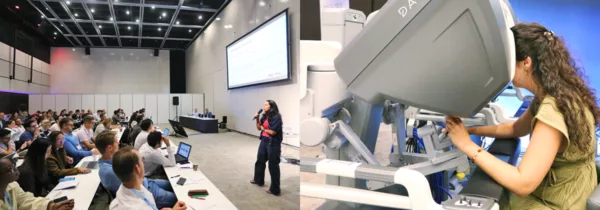
Firstly, EUREP comprises five modules divided into the following topics:
- Urological cancer
- Prostate cancer and testis cancer
- Urolithiasis and paediatric urology
- Functional and reconstructive urology, and male voiding LUTS
- Andrology, infection, and trauma
These modules are interspersed with Hands-on Training (HOT) sessions; from basic laparoscopy (LUSs1), kidney transplantation (KT), to an introduction to robotic surgery, and many more.
What makes EUREP so sought after among the residents? Find out straight from some of the participants of the recently concluded 24th edition, which took place from 4 to 9 September 2026 in Prague, Czech Republic.
Dr. Varun Agarwal (IN)
I can describe my EUREP experience in one word: Fascinating.
For starters, I was amazed at how well the faculty taught us. Each one had their own unique teaching style and sense of humour. They kept classes interactive in ways I did not expect. It was incredible to be taught by the very people who contribute to the EAU Guidelines and understand the nuances on how they were written. We refer to these Guidelines in our classes and clinical setting day in and out. It was great to have evidence-based discussions on how we treat our patients.
Attending EUREP was an eye-opening experience because I saw how European standards of care differ from what I had experienced in my own training. I also learned how to make the best of the different systems and approaches I encountered.
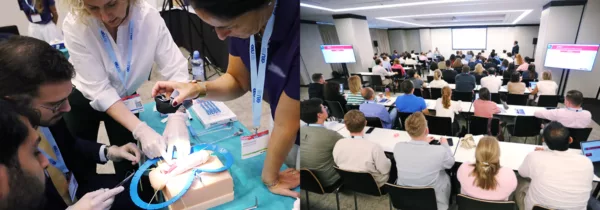
The HOTs were another great experience. Each mentor was patient and understanding; they even provided morale boost when I did not do particularly well.
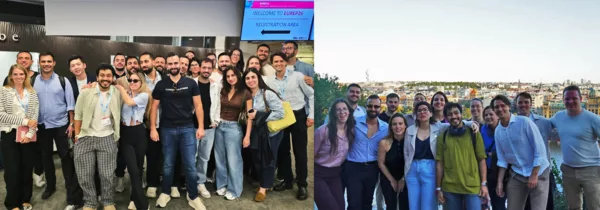
The sessions were incredibly interactive and involved fun games and activities, unlike anything I have experienced in all my trainings so far. On Sunday, 6 September, a barbecue was held at a scenic location overlooking the Vltava River. As someone from a geographically and culturally different world, that evening was memorable because of great company, good food, fun karaoke, and dancing.
Dr. Oluwatobi A. Fasola (CA)
A couple of things stood out: the organisation of EUREP was impeccable from the first to the last day, the scientific programme left very little uncovered, and the faculty taught with an openness that made the sessions interactive rather than one-directional. I found myself asking questions and getting real answers. It was also interesting to see where the European guidelines slightly differ from the Canadian guidelines.
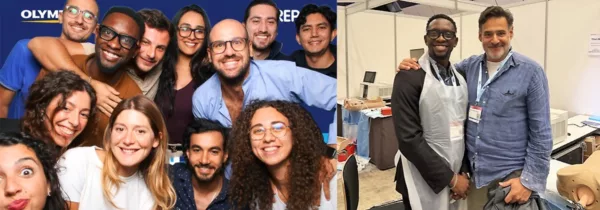
Frankly, the HOTs were outstanding because the models were strikingly close to real life and I had the chance to work one-on-one through procedures under the guidance of experienced faculty members. These have changed how I will approach certain steps in the operating room. Alongside that, the friendships and professional connections I made with fellow residents were an unexpected gift, and the ones I intend to keep.
Dr. Dmitry Lerman (IL)
The programme gave us an expansive overview of almost all areas of modern urology in a short amount of time. I enjoyed the practical and interactive sessions. I had the opportunity to learn about sacral neuromodulation, different minimally invasive procedures, implantation of andrological devices, and functional urology — areas that are especially interesting to me and that I would like to develop further in my practice. EUREP is truly very useful for residents preparing for their final exams.
One of the best parts for me was the international networking. I met many great young urologists from many countries — from India to UK, and from Serbia and Greece to Germany, and many other places. It was a great opportunity to exchange experience, discuss diverse approaches to urology, and see how medical practice can vary in different countries.
My only disappointment is that EUREP can only be attended once. I would definitely join again if it were possible!
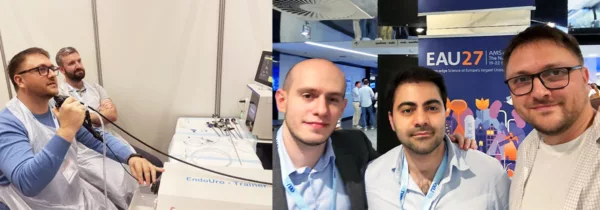
Dr. Givi Maglaperidze (GE)
My personal highlight was the HOT sessions because I had the opportunity to refine fundamental techniques under the guidance of world-class experts. Beyond the high-yield lectures and updates of the latest EAU Guidelines, what stood out the most was the dedicated mentorship, as well as the camaraderie during and after the sessions.
To future EUREP residents, immerse yourselves in every session, ask questions, take full advantage of the experts' advice, and make sure that you do not miss the barbecue party! Unwinding and connecting with colleagues after hours made the experience complete.
Programmes such as EUREP plays a vital role in shaping, mentoring, and empowering the next generation of urologists. It helps deliver the highest standard of care while building lifelong professional friendships.
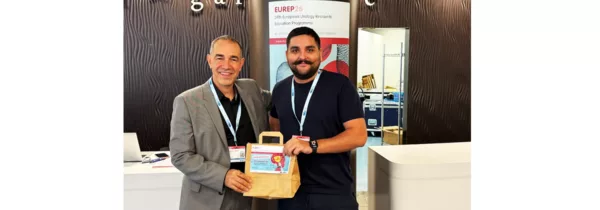
Dr. Sakhawi Yusof (MY)
The programme consisted of multiple modules covering most major areas of urology. The lectures on urological cancers were exceptionally brilliant, offering greater clarity on complex topics and highlighting important updates from the EAU Guidelines that can be applied directly to patient care.
The HOTs were another outstanding part of the programme. I had the opportunity to participate in the basic laparoscopy and robotic surgery modules, where I became more familiar with the instruments and learned fundamental techniques for handling and manoeuvring them correctly. The mentors were experienced, approachable and generous in sharing their practical tips and techniques.
The Aquablation module also introduced me to an emerging technology in urology and broadened my perspective on the management of benign prostatic enlargement. It reflected what makes urology such an exciting specialty, one that continues to innovate and evolve.
Beyond the academic programme, EUREP gave me the opportunity to meet people from many different backgrounds who shared the same passion for urology. We spoke the same “urological language,” exchanged ideas and discussed new developments in the EAU Guidelines.
Suggested for you
See allThere are no news articles related to this page right now. See all news articles