
Baltic26 highlights contemporary urology and emerging talents
About 400 delegates convened at the recently concluded 11th Baltic Meeting in collaboration with the EAU (Baltic26), held from 22–23 May in picturesque Riga, Latvia. Prof. Juris Plonis (LV), President of the Latvian Urological Association, led the meeting as Chair.
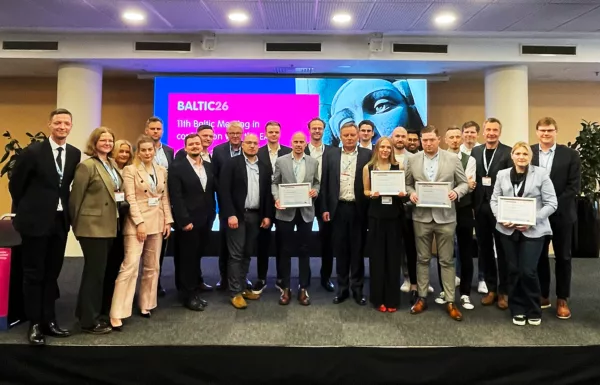
Boot camp kicks things off
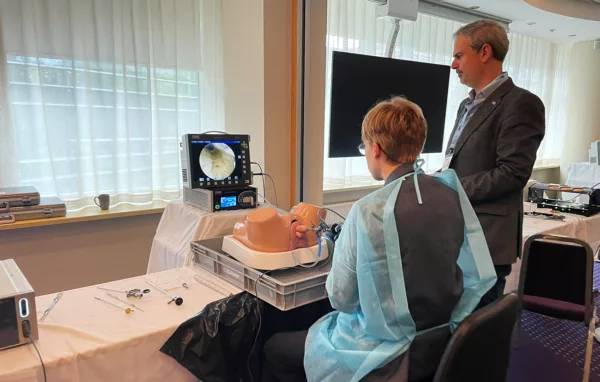
On 21 May, the popular ESU Urology Boot Camp launched the meeting for first-year residents from Lithuania, Latvia, and Estonia. Participants honed their skills through hands-on training in Endoscopic Stone Treatment Step 1 (ESTs1), Laparoscopic Urological Skills Step 1 (LUSs1), and Transurethral Resection of Bladder Tumour (TURBT).
Young Urologists Competition
Every year, the Baltic meeting puts the spotlight on promising urologists and their innovative work. This year’s winner of the Young Urologists Competition is Dr. Rūta Žulpaitė (LT), who presented “From rodents to reality: Studying kidney ischemia-reperfusion injury in large animals". Regarding biology, she discussed the early biological activity of relaxin (RLX), a peptide hormone that has emerged as a promising therapeutic strategy for protecting the kidney against injury. In her presentation, she outlined several challenges encountered, including the use of an allogeneic model, staged nephrectomy, technical difficulties associated with pigs, and the considerable financial, logistical, and labour demands involved. Dr. Žulpaitė also underscored that “complex models do not give cleaner answers; they give more honest ones.”
Take-home messages
Some of the key messages of Baltic26 lectures include the following:
- In his EAU lecture “Indication and timing for cystectomy in bladder cancer patients”, EAU Secretary General Prof. Arnulf Stenzl (DE) reported that the progression rate to muscle-invasive bladder cancer (MIBC) is 15–17%. Perioperative systemic therapy includes cisplatin-based neoadjuvant chemotherapy (NAC), antibody–drug conjugates (ADCs), and immunotherapy. He recommended performing radical cystectomy within three months, preferably using a robotic approach when available. Prof. Stenzl also advocated offering all urinary diversion (UD) options. Follow-up should include clinical and functional evaluations, imaging, and liquid biomarkers.
- In Plenary Session 1: Sexual disorders after surgery, Dr. Riekstiņš Reinis (LV) presented "After radical prostatectomy" where he stated that erectile dysfunction (ED) is common but recovery is broader than erections. He advised to start before surgery: baseline erectile function, comorbidity, nerve-sparing feasibility, and goals. Ask explicitly about orgasm, climacturia, arousal leakage, pain, morphology, and partner bother. PDE-5 inhibitors help assisted function; evidence for spontaneous recovery is inconsistent. A single PDE-5 prescription is not a rehabilitation programme. A survivorship pathway should be measured, revisited, and escalated.
- In Plenary Session 4: Information flow and patient education in the modern information environment, "Information reliability, sharing and trust in the digital era" Dr. Kadi Krinal (EE) concluded that healthcare professionals continue to be an important source of information in the context of illness and stressed that communication is a fundamental clinical competence.
She observed that shared responsibility can increase the risk of inaccurate actions, thereby emphasising the need for a thoughtful communication process involving the co-creation of meaning.
Moreover, she pointed out that the deliberate dissemination of misinformation, disinformation, and malinformation, combined with technological errors, highlights the growing importance of meaningful human interaction in healthcare.
Stellar posters
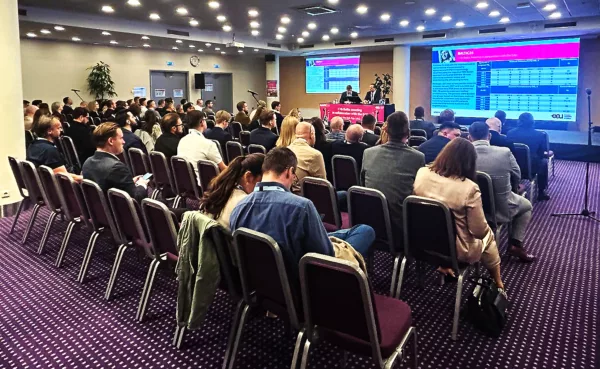
The three Poster Sessions encompassed important updates and insights on topics such as prostate cancer (PCa) treatment strategies, penile diseases, infections, and advances in transplantation, reconstruction, and urothelial cancer, to name a few. The Best Posters awardees are as follows:
1st Prize winners
- “Prevalence of Antimicrobial Resistance in Urinary Microflora Among Patients with External Urinary Drainage” by Dr. Arvis Freimanis (LV) – P34
- “The PRAISE-U Pilot in Lithuania: Transitioning to Risk-Based prostate cancer early detection” by Dr. Ugne Mickeviciute (LT) – P16
2nd Prize winners
- “Effect of NeuroSAFE-guided vs standard LRP: One Centre Experience from Estonia” by Dr. Marit Pärt (EE) – P22
- “Giant Papillary Renal Cell Carcinoma: A Case Report” by Dr. Aleksandrs Dorogojs (LV) – P40
3rd Prize winners
- “Risk-Adapted Nodal staging in Penile cancer: Outcomes of Sentinel Node biopsy vs open lymphadenectomy in a Tertiary center” by Dr. Maria do Carmo Pinto (PT) - P44
- “Baseline Characteristics and early treatment patterns of Primary prostate cancer patients undergoing HIFU: A Single-Center Experience” by Dr. Marija Skultecka (LV) – P01
European School of Urology (ESU) courses
The ESU course, “Surgical Complications during Laparoscopic/Robotic Urological Procedures: Prevention, Diagnosis, Management and Complications,” was divided into two sessions spearheaded by experts Assoc. Prof. Ersin Köseoğlu (TR), Prof. Maria Chiara Sighinolfi (IT), and Prof. Theodoros Tokas (GR).
Part 1 covered the frequency, risk factors, prevention, and key aspects of vascular lesions; particular emphasis on intestinal, urinary, neuronal, and solid organ lesions; and strategies to minimise complications in robotic surgery.
Part 2 focused on the identification of risk factors and the grading of complications, training in the management of complications, and the presentation of expert video cases.
More resources
For more Baltic26 content – eye-opening presentations, insightful abstracts, and informative videos – feel free to explore the Baltic26 Resource Centre.
Suggested for you
See allThere are no news articles related to this page right now. See all news articles