
Learning in Japan: What stood out, what we gained, and why an exchange programme could be for you
Which procedures surprised us the most? What left a lasting impression? Read about our stories and experiences from the European Association of Urology (EAU) and Japanese Urological Association (JUA) Exchange Programme.
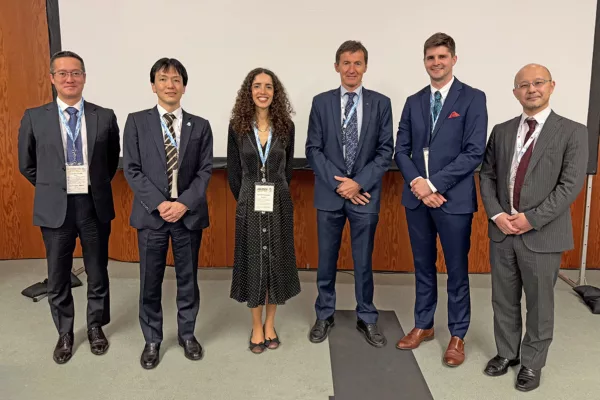
A fellow's report by Dr. Frankiewicz
Together with Andreia, I had the privilege of participating in the 2026 JUA–EAU Academic Exchange Programme, visiting three leading Japanese academic centres: Asahikawa Medical University, the University of Tokyo, and Osaka University. The programme concluded with presentations at the 113th JUA Annual Congress in Kyoto.
What stood out surgically was the approach to robotic surgery across all three centres. Every procedure I observed — prostatectomy, nephrectomy, and a particularly challenging ureteronephrectomy in a patient after Bricker diversion — was conducted in the same deeply educational manner: the operating surgeon explaining the rationale behind each step, not just executing it. I also had the opportunity to train on the hinotori™ surgical robot, Japan's domestically developed robotic platform, which offered an interesting contrast to the da Vinci system I use at home.
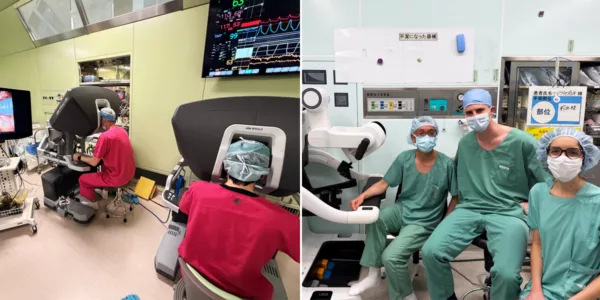
What surprised me was how seamlessly the Japanese teams integrated a visiting surgeon into their daily workflow. In Asahikawa, a handwritten note was waiting for me at my desk — my own desk — welcoming me by name. That level of hospitality extended into every ward round, every conference, and every conversation.
What added real value beyond the operating theatre was the broader academic programme. In Kyoto, I presented early findings from the SAFER Collaborative — our multicentre project on in situ urethroplasty during artificial urinary sphincter explantation for erosion, conducted under the umbrella of the EAU Young Academic Urologists Reconstructive Urology working group — at a fellowship forum alongside JUA, AUA, and EAU delegates. I also attended the EAU–JUA leadership meeting, the joint JUA–EAU symposium, and a session of the International Journal of Urology editorial board, all of which opened doors to collaborations I had not anticipated.
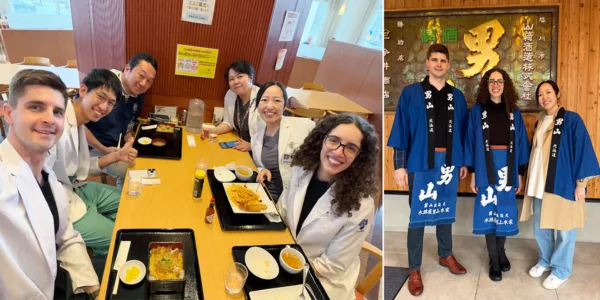
The atmosphere throughout was one of mutual respect, intellectual curiosity, and genuine warmth. At every institution, from Asahikawa to Tokyo to Osaka, the teams welcomed us not as visiting observers but as colleagues. Ward rounds turned into open discussions, lunches became brainstorming sessions, and farewell speeches left me more moved than I had expected after such brief stays. The consistency of that hospitality across all three centres was perhaps the most striking impression of the entire programme.
Why apply? Because this programme does what conferences alone cannot: it places you inside a different medical culture, at the bedside and at the console, and changes how you see your own practice. I would recommend it without hesitation.
A remarkable and enriching programme: A report by Dr. Cardoso
Konnichiwa!
The Japanese Exchange Programme was an extraordinary experience that exceeded all my expectations. It was exceptionally well organised, allowing Mikołaj and I to make the most of our time in Japan while observing practices of three outstanding urological centres in different cities.
Our journey began in Asahikawa, considered the coldest city in Japan, welcomed by some of the warmest hosts I could ever wish for. There, I had my first contact with the hinotori™ robotic system and I was fortunate to observe Prof. Numakura performing a nerve-sparing radical prostatectomy. Beyond the operating room, I also had the opportunity to observe Dr. Naoki Wada in the outpatient clinic and participate in team meetings involving clinical case discussions and presentations. The team also introduced us to Asahikawa’s excellent cuisine and took us to the Otokoyama Sake Brewery Museum, which made the experience culturally enriching as well.
The next stop was the University of Tokyo, where I once again saw the hinotoriTM system in action during a radical prostatectomy and a nephroureterectomy. One of the highlights was the opportunity to spend an afternoon using the hinotoriTM simulator. In the evening, we shared a yakiniku (Japanese barbecue) dinner, which provided a wonderful opportunity to strengthen relationships and exchange perspectives in a relaxed environment.
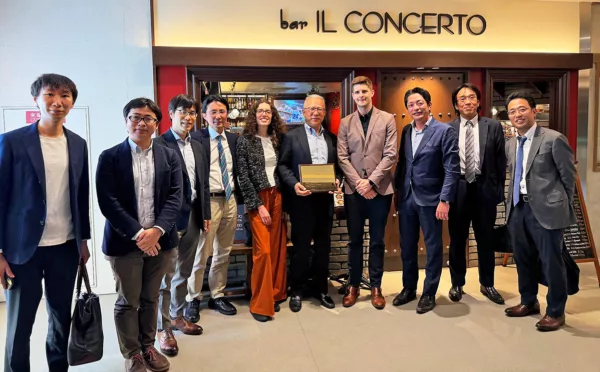
The JUA Meeting in Kyoto was truly the perfect conclusion to the programme. The scientific sessions were outstanding, and the hospitality of Prof. Osamu Ukimura, together with the excellent organisation and venue, made the meeting unforgettable.
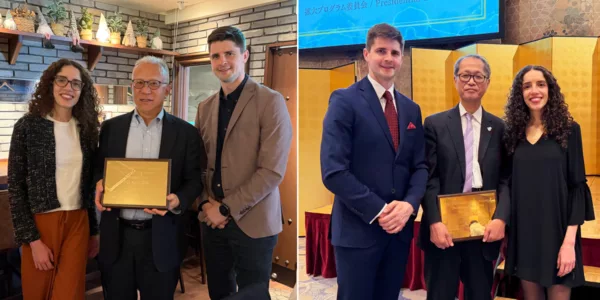
After traveling on the Shinkansen bullet train, with Mount Fuji visible in the distance, we arrived in Osaka. At Osaka University, I observed a well-executed radical nephroureterectomy performed on a patient with an ileal conduit. In addition, I particularly enjoyed visiting the impressive research laboratory facilities and connecting with PhD students, as well as participating in highly educational team meetings and case discussions. The department also welcomed us warmly beyond the hospital environment, taking us to the beautiful Katsuoji Temple and sharing the Daruma symbol of luck with us.
Japanese hospitality was exceptional throughout the entire experience. Everywhere I went, I felt welcomed and fully integrated as part of the team. Although each visit lasted only a few days, the strong connections we established made the experience deeply meaningful. Without question, it was a remarkable and enriching programme that broadened my horizons, strengthened my network, and opened the door to future collaborations and multicentre studies.
About the EAU Exchange Programmes
Curious about the best practices of urological communities around the world? Expand your knowledge of top techniques and strategies, and learn them first-hand through our International Academic Exchange Programmes.