
Reflections from TIP: New technology, RWE, and patient needs
In this interview, we spoke with Dr. David Zach from the Dept. of Urology at the Medical University of Vienna (AT) about his experience of attending the EAU Talent Incubator Programme (TIP) module on ‘New technology & Real-World Evidence (RWE)’, held in Rotterdam earlier this month (3–5 September 2026).
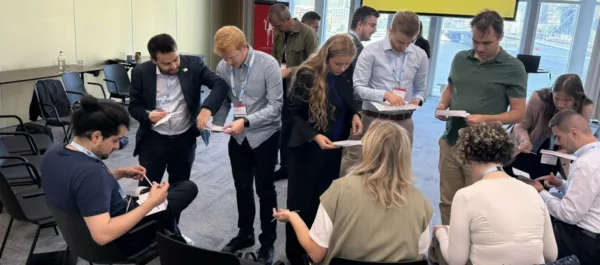
Dr. Zach reflects on how attending TIP has broadened his perspective on emerging technologies and new approaches to research, while reinforcing the importance of patient-centred care and of maintaining human judgement when using AI.
What motivated you to take part in the Talent Incubator Programme?
Dr. Zach: “After learning about the programme online, I became curious. When I first took part last January, I was still in medical school and my training had focused mainly on studying disease. Although patients and their needs are discussed in some classes, I wanted the chance to look beyond that and to learn more about what a patient needs for a good relationship with their urologist and a positive outcome from their perspective. I also wanted to understand how we can implement this in our clinical work, using the tools available in this fast-changing technological field.”
Looking back over the three days, what was the most valuable or thought-provoking thing you learned?
“Our patients look for empathy and good quality of life far more than for overall survival or clinical endpoints alone. We need to meet them where they are, rather than simply focusing on maximising treatment.”
What was your biggest learning from the AI and research sessions?
“Prof. Langberg gave an eye-opening three-hour course spread over two days. It was incredible to see how LLMs could be used with synthetic data, and how quickly results could be generated. He emphasised the importance of not losing the steering wheel and of always checking what our AI assistants produce. What I will take away from this for my own research is that, at the moment, we cannot use our databases with AI because of data protection concerns, but in the not-too-distant future, local models with enough computational power may well speed up the process tremendously.”
What else did you value about the TIP programme?
“Talking to other young urologists from all over Europe about their experiences, their ways of practising and health care in their countries enriches your ideas for regional innovation and for what you might be able to improve in your own department, no matter your level of training or seniority.”
Any concluding thoughts?
“I believe the scientific content of this programme will have a lasting effect on me, particularly in shaping my understanding of what to expect from patients and what they want from us. Further implementation of AI, especially through updated health care software, will speed up the collection of real-world evidence and help us better predict outcomes for the patients we see in everyday practice.”
For more information, you can visit the EAU Talent Incubator Programme website for details on the upcoming modules and how to apply to participate.