
Kidney perfusion: Techniques and graft outcomes
Kidney preservation techniques aim to minimise organ damage during the period between retrieval and transplantation, thereby improving post-transplant outcomes. The preservation period should be considered the responsibility of the urologist or transplant surgeon and offers a unique opportunity for research, rescue, and treatment of the organ.
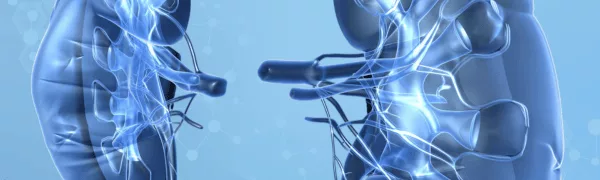
Historically, Static Cold Storage (SCS) has been the standard, but advancements have led to Hypothermic Machine Perfusion (HMP), Normothermic Machine Perfusion (NMP), and variations like Oxygenated HMP (HMPO2). Emerging technologies like vitrification and nanowarming are also being explored for long-term organ banking.
SCS remains a robust and satisfactory method for living donor and standard criteria DBD kidneys, particularly for short CITs.[1]
HMP involves continuously circulating a cold preservation solution (1-10°C) through the organ’s vasculature using a device. This dynamic method is thought to reduce vasospasm, protect the vascular endothelium, flush out waste products, and support a low level of metabolism, compared to SCS.[2]
HMP significantly reduces the risk of DGF compared to SCS. Meta-analyses consistently show this benefit, with high-certainty evidence. HMP has also been associated with improved graft survival in the first year after transplantation.3 Some studies show improved 1- and 3-year graft survival, though long-term graft function might not be significantly affected. HMP benefits are observed in both DBD and DCD grafts. For DCD kidneys, HMP reduces DGF risk, with fewer perfusions needed to prevent one episode of DGF compared to DBD kidneys (7.26 vs 13.60). It has also shown significant DGF reduction and improved graft survival for ECD kidneys. Economic analyses suggest that HMP is cost-saving at 1 year compared with SCS, due to reduced DGF and shorter hospital stays and, above all, improved graft survival.[4,5,6]
Regarding HMPO2, oxygen aims to support a low level of metabolism, replenish ATP synthesis, and reduce the accumulation of succinate, thereby protecting against ischaemia-reperfusion injury (IRI).[7,8,9] A large randomised controlled trial (COMPARE trial) found that HMPO2 did not significantly improve estimated glomerular filtration rate (eGFR) at 12 months for DCD kidneys from donors over 50 years, when interpreting the primary endpoint strictly. However, considering the beneficial effect of HMPO2 versus HMP on graft survival, HMPO2 showed a significant improvement in renal function at 12 months post-transplant. It was also associated with a lower rate of graft failure (3% versus 10%) and a significant reduction in acute rejection incidence.
Studies on end-ischaemic HMPO2 (short-term HMPO2 after an initial period of SCS) have yielded mixed results. The COPE-POMP trial found no significant improvement in 1-year graft survival or function for ECD kidneys that were first statically cold stored and then exposed to HMPO2 prior to implantation. This suggests that continuous HMPO2 from procurement until transplantation might be more effective, especially for DCD donors.[10,11]
NMP involves circulating an oxygenated solution at near-physiological temperatures (35-37°C) through an isolated organ to re-establish metabolic function. This technique offers the potential for pre-transplant viability assessment and organ reconditioning through the delivery of therapeutic agents. NMP enables the recovery of fatty acid metabolism, oxidative phosphorylation, Kreb’s cycle, and pyruvate metabolism pathways, indicating better recovery than SCS. Longer durations of NMP (e.g. 8 hours) may be necessary to promote recovery after warm and cold ischaemic injury.[12,13]
NMP allows for real-time assessment of organ quality using functional parameters like blood flow, urine production, and biomarkers. NMP, as well, provides a platform for delivering pre-transplant therapies, including cellular and genetic interventions, to promote organ recovery and repair. Direct delivery of therapies to the isolated organ during perfusion has the advantage of precise targeting, allowing for monitoring of effects and avoiding systemic side effects in the recipient.[14] Safety and feasibility have been established, but NMP is not routinely used in clinical kidney transplantation.
It is the objective of our working group within ESTU to contribute to the development of an innovative line of renal preservation.
Authors on behalf of the EAU Transplantation Section's Preservation Working Group
- Gómez-Dos-Santos, Victoria. Urology Department. Hospital Universitario Ramón y Cajal. Madrid. Spain. vgomezd@salud.madrid.org
- Branchereau, Julien. Service d'Urologie et de Transplantations rénales. CHU Nantes Hôtel Dieu. France. julien.branchereau@chu-nantes.fr
- Prudhomme, Thomas. Service d’urologie, andrologie et transplantation rénale. CHU Toulouse. France. prudhomme.t@chu-toulouse.fr
- Musquera, Mireia. Urology Department. Hospital Clinic. Barcelona. Spain. mmusquera@clinic.cat
References
- Tingle SJ, Thompson ER, Figueiredo RS, Moir JAG, Goodfellow M, Talbot D, Wilson C. Normothermic and hypothermic machine perfusion preservation versus static cold storage for deceased donor kidney transplantation. Cochrane Database of Systematic Reviews TBD, Issue TBD. Art. No.: CD011671. DOI:10.1002/14651858.CD011671.pub2.
- Guibert EE, Petrenko AY, Balaban CL, Somov AY, Rodriguez JV, Fuller BJ. Organ Preservation: Current Concepts and New Strategies for the Next Decade. Transfusion medicine and hemotherapy: offizielles Organ der Deutschen Gesellschaft fur Transfusionsmedizin und Immunhamatologie. 2011;38(2):125-142.
- Moers C, Smits JM, Maathuis MH, et al. Machine perfusion or cold storage in deceased-donor kidney transplantation. The New England journal of medicine. Jan 01 2009;360(1):7-19.
- Jochmans I, Moers C, Smits JM, et al. Machine perfusion versus cold storage for the preservation of kidneys donated after cardiac death: a multicenter, randomized, controlled trial. Ann Surg. 2010;252(5):756-764.
- Savoye E, Macher MA, Videcoq M, et al. Evaluation of outcomes in renal transplantation with hypothermic machine perfusion for the preservation of kidneys from expanded criteria donors. Clinical transplantation. May 2019;33(5): e13536.
- Brat A, de Vries KM, van Heurn EWE. Hypothermic Machine Perfusion as a National Standard Preservation Method for Deceased Donor Kidneys. Transplantation. 2022 May 1;106(5):1043-1050
- Darius T, Gianello P, Vergauwen M, et al. The effect on early renal function of various dynamic preservation strategies in a preclinical pig ischemia-reperfusion autotransplant model. American journal of transplantation: official journal of the American Society of Transplantation and the American Society of Transplant Surgeons. Mar 2019;19(3):752-762.
- Buchs JB, Lazeyras F, Ruttimann R, Nastasi A, Morel P. Oxygenated hypothermic pulsatile perfusion versus cold static storage for kidneys from non heart-beating donors tested by in-line ATP resynthesis to establish a strategy of preservation. Perfusion. Mar 2011;26(2):159-165.
- Lazeyras F, Buhler L, Vallee JP, et al. Detection of ATP by "in line" 31P magnetic resonance spectroscopy during oxygenated hypothermic pulsatile perfusion of pigs' kidneys. Magma (New York, N.Y.). Oct 2012;25(5):391-399.
- Jochmans I, Hofker HS, Davies L, Knight SR, Pirenne J, Ploeg R. Oxygenated hypothermic machine perfusion of kidneys donated after circulatory death: an international randomised controlled trial. Transplant international : official journal of the European Society for Organ Transplantation. 2019;32(SI):27.
- Husen, P., Boffa, C., Jochmans, I., Krikke, C., Davies, L., Mazilescu, L., et al. (2021). Oxygenated End-Hypothermic Machine Perfusion in Expanded Criteria Donor Kidney Transplant: A Randomized Clinical Trial. JAMA Surgery, 156(6), 517–525. https://doi.org/10.1001/jamasurg.2021.0949
- Hosgood, S. A., & Nicholson, M. L. (2023). Long-term kidney preservation: Moving beyond ice. Transplant International, 36, 11948. https://doi.org/10.3389/ti.2023.11948
- Hosgood, S. A., & Nicholson, M. L. (2024). Advancements in Normothermic Machine Perfusion. European Surgical Research, 65, 137–145. https://doi.org/10.1159/000542290
- Thompson ER, Bates L, Ibrahim IK et al. (2020). Novel delivery of cellular therapy to reduce ischemia reperfusion injury in kidney transplantation. Am J Transplant. 2021;21:1402–1414