
Unseen, uncounted, unaddressed: The case for continence health in EU policy
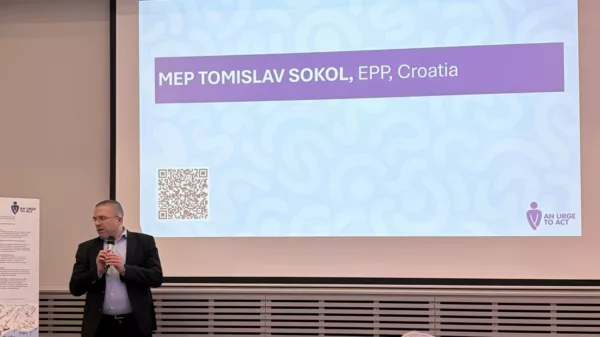
On 24 June, the EAU Policy Office brought continence health to the forefront of EU discussions with a high‑level event in Brussels, hosted by MEP Tomislav Sokol (EPP, Croatia) under the Urge to Act campaign and the MEP Interest Group on Continence Health. Following the launch of the campaign’s latest paper, “Coexisting Conditions: Urinary Incontinence as a Non‑Communicable Disease Comorbidity” at EAU26, we gathered patient representatives, clinicians and carers to discuss the topic.
For clinicians and policymakers alike, the message was clear: Urinary incontinence (UI) rarely exists alone. Since the start of the campaign in 2023, stakeholders have repeatedly stressed that continence problems often emerge alongside other chronic conditions, sometimes as a consequence of treatment, sometimes as a symptom of a condition, but almost always overlooked.
Patients and carers: The human impact behind the data
The event opened with powerful testimonies from patient organisations. Erik Briers, Secretary General of EuropaUomo, and Theodoros Yfantis from the World Bladder Cancer Patient Coalition, reminded the audience that after a cancer diagnosis, conversations about treatment‑related comorbidities, including UI, are often neglected. Both emphasised the need for clinicians to proactively address continence issues throughout the care pathway.
Briers also highlighted a practical but symbolic gap in the absence of sanitary bins in male toilets, which leaves men with UI without a dignified way to dispose of pads. Yfantis shared striking data: 43% of bladder cancer patients report that continence problems negatively affect their mental health and intimate relationships. As he put it, “Continence is never only physical. It reaches into relationships, confidence, and whether someone still feels part of the world.”
Their policy wish list was simple but urgent:
- Better awareness of treatment options and their consequences.
- Clear guidance on what to do when continence problems arise.
- Basic infrastructure changes to support dignity in daily life.
Continence is never only physical. It reaches into relationships, confidence, and whether someone still feels part of the world.
Quality of life is a core metric for EU health policy
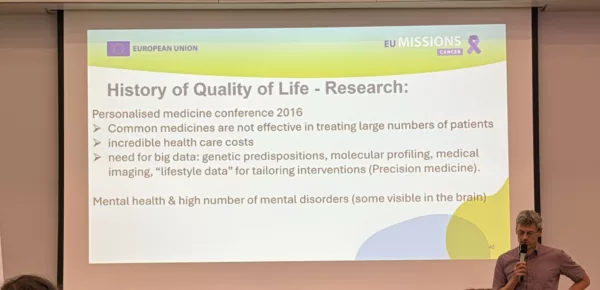
From the European Commission, Dirk Hadrick (Cancer Mission, DG RTD) explained the rationale behind the EU Cancer Mission’s Quality of Life indicators. He stressed that these metrics must evolve to reflect the lived realities of cancer patients and survivors, capturing not only physical outcomes but also mental health and social participation. His intervention reinforced the need to integrate continence health into broader EU health frameworks.
When treatments trigger UI
Prof. Francisco Cruz, newly elected member of the EAU Policy Office Board, provided a clinician’s perspective on the links between cardiovascular disease (CVD) treatments and bladder dysfunction. He outlined how certain medications can induce overactive bladder, one of the leading causes of UI, highlighting the importance of cross‑specialty awareness and patient counselling.
Eva Wallace, nurse and Chair of the EAUN Special Interest Group on Continence Health, spoke both as a professional and as a carer for a patient with a neurodegenerative disease. She reminded the audience that urination is a basic human routine, and when it becomes unpredictable or uncontrollable, every aspect of daily life is disrupted.
Representing the World Federation of Incontinence and Pelvic Problems, Tomasz Michalek underscored the chronic underrepresentation of UI in research and data collection. Without robust evidence, he warned, policymakers and clinicians lack the tools to design effective interventions.
Finally, Claire Champeix from Eurocarers called for stronger recognition of informal carers and their inclusion in policy discussions. She noted that momentum around the EU Carers Strategy has slowed since its publication, urging institutions to revive attention to this essential group.
A Call to Action from the European Parliament
Closing the event, MEP Tomislav Sokol walked participants through the Urge to Act manifesto, clarifying where the EU can drive change and where national and regional authorities must take the lead. His direct message to stakeholders was to keep pushing, keep meeting policymakers, and keep making noise. This is how change happens.