
Recent study results highlight the importance of patient-centred urological care for spina bifida
The EAU–ESPU Paediatric Urology Guidelines Panel, in collaboration with the International Federation for Spina Bifida and Hydrocephalus (IFSBH), has published survey results exploring the experiences and priorities of people with spina bifida (SB) in relation to urological care, quality of life and sexual health.
The study, Assessing Patient-Centred Urological Care for Spina Bifida (‘t Hoen, Radmayr et al. Neurourology and Urodynamics, July 2026), aimed to explore the perspectives of patients and their families to inform future clinical guideline development.
Understanding patients’ experiences
People with spina bifida often require lifelong multidisciplinary care. However, the organisation, accessibility and funding of healthcare services vary across European countries, potentially affecting patients’ experiences and outcomes.
To investigate these differences, the research team developed a multilingual digital survey covering demographics, treatment history and healthcare organisation, alongside validated questionnaires assessing quality of life (QoL) and sexual function. A total of 281 respondents participated, representing 18 European and 13 non-European countries. Patient representatives also contributed to the interpretation of the findings.
Results: QoL and sexual health remain key concerns
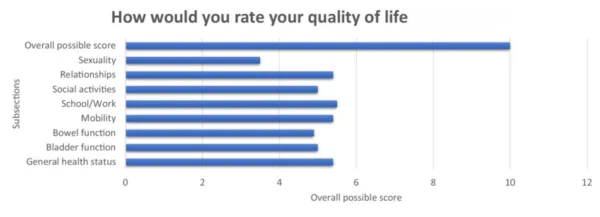
The survey findings indicated lower quality of life scores than those reported in historical validation cohorts for the questionnaires used. Across eight assessed domains, including relationships, social activities, mobility, bladder and bowel function, and general health, all scores were below 6 on a scale of 0 to 10. Sexuality received the lowest scores.
Sexual function was assessed in 46 respondents aged 13 years or older who chose to complete the relevant questionnaires. The results indicated sexual dysfunction among female respondents and mild erectile dysfunction among male respondents. The findings highlight the importance of addressing sexual health proactively in clinical consultations, while recognising that the number of respondents completing these assessments was limited.
Discussions with patient representatives also identified embarrassment, limited opportunities to discuss sexuality and a lack of specialised support as barriers to addressing sexual health. Other concerns included reduced independence, self-esteem, social participation and difficulties with continence management.
Differences in healthcare
The study identified differences between countries in the organisation and financing of care, particularly regarding access to catheters and bladder medication. Respondents in Bulgaria and Türkiye more frequently reported paying for these essentials themselves, whereas costs were more commonly covered by health insurance or hospitals in Germany, Italy, the Netherlands and Denmark.
More than half of respondents also reported difficulties contacting healthcare providers. Access to paramedical specialists, including sexologists, psychologists and occupational therapists, was limited for many participants.
These findings underline the importance of accessible, coordinated and multidisciplinary care, including effective transition pathways from paediatric to adult services.
Future guideline development
This collaboration represents an important step towards integrating patient perspectives into urological guideline development. The findings will contribute to future updates of the EAU–ESPU clinical guidelines on spina bifida and help identify priorities for further research.
The authors emphasise that QoL and sexuality should be addressed routinely in clinical care, alongside equitable access to essential treatments and appropriate supportive services. Larger studies are needed to clarify the factors influencing outcomes across different healthcare systems.