
What happens when the artificial urinary sphincter fails?
Advances in cancer treatment translate into a 99% 10-year prostate cancer survival after prostatectomy (1). However, a small but significant percentage of men continue to suffer from urinary incontinence, and treatment for this has not seen a similarly impressive improvement. Multi-national data analysis of 4,729 men treated with artificial urinary sphincter (AUS) estimate only 51.7% don’t need reintervention at 10 years and 31.3% at 20-years.
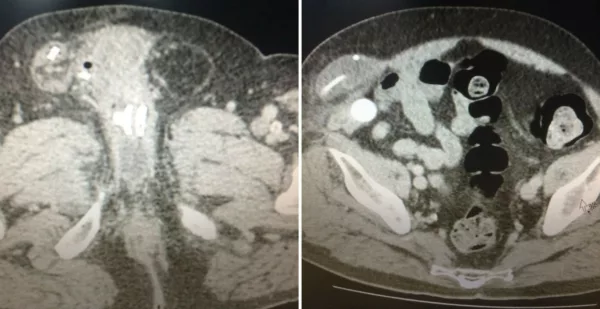
The identified risk factors for reintervention are previous urethroplasty, radiotherapy, smoking, and diabetes (2). When a new sphincter is inserted, the perioperative complication rates seem similar to their primary insertion (3). However, repeat AUS carries a higher risk of infection or urethral erosion (4). Social continence rates (defined as less than a pad per day) decrease from 90% to 82% after one and 71% after two revision (5).
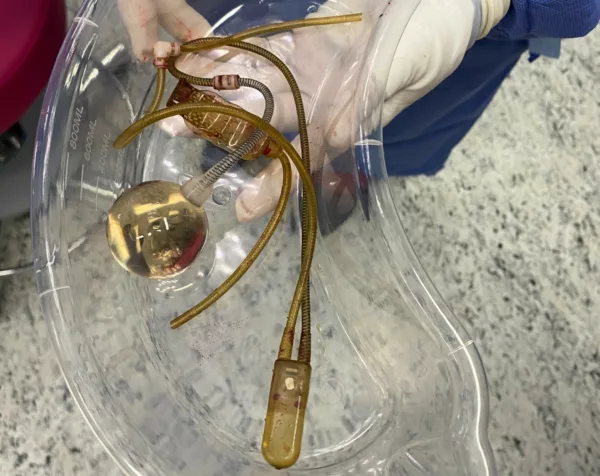
Unsurprisingly, patient enthusiasm for revision is waning. In our cohort, only a quarter attempted salvage re-implantation, with the majority opting for conservative treatment or urinary diversion. Of those who proceeded with re-implantation, half ultimately required re-explantation (6).
The erosion/infection risk factors reported in studies relate to tissue quality, for example radiotherapy and cardiovascular factors. Testosterone levels are rarely reported, however their importance in maintaining urethral tissue quality has been documented for urethral strictures (7). A recent small retrospective study showed that men with low testosterone were three times more likely to suffer AUS erosion than men with normal testosterone (8). We note that radiotherapy is not only a generally accepted risk factor for AUS complications, but it is also more commonly associated with androgen deprivation therapy compared to prostatectomy.
While continuing to focus on urethral tissue vascularity and health, deactivation of the device at night has been proposed to limit ischaemia (9). It would be interesting to see if patients doing this regularly increases the risk of mechanical failure.
We suggest addressing cardiovascular risk factors, offering testosterone replacement, and considering nocturnal sphincter deactivation as potential preventive strategies for selected higher risk patients with a previous AUS.
References
- Hamdy FC, Donovan JL, Lane JA, Metcalfe C, Davis M, Turner EL et al. Fifteen-Year Outcomes after Monitoring, Surgery, or Radiotherapy for Prostate Cancer. N Engl J Med 2023; 388: 1547–1558.
- Prebay ZJ, Ebbott D, Foss H, Li M, Chung PH. A global, propensity-score matched analysis of patients receiving artificial urinary sphincters and the risk of complications, infections, and re-interventions. Transl Androl Urol 2023; 12: 832–839.
- Jella T, Fernstrum A, Callegari M, Cwalina T, Mundey W, Mahran A et al. Perioperative outcomes between primary and replacement artificial urinary sphincter surgery: An acs-nsqip analysis. Turkish J Urol 2021; 47: 427–435.
- Hebert KJ, Linder BJ, Morrisson GT, Latuche LR, Elliott DS. A comparison of artificial urinary sphincter outcomes after primary implantation and first revision surgery. Asian J Urol 2021; 8: 298–302.
- Raj G V., Peterson AC, Khai LT, Webster GD. Outcomes following revisions and secondary implantation of the artificial urinary sphincter. J Urol 2005; 173: 1242–1245.
- Loufopoulos I, Pace K , Toia B, Kaprioniotis K, Newman T, Barratt R, Nobrega A, Noah A, Gresty H, Sharma D, Greenwell TJ, Seth J OJ. Natural History of Artificial Urinary Sphincter Cuff Erosion in Males: Experience from Two Tertiary Centres in the United Kingdom. Unpubl Manuscr.
- Soeroto AA, Maulana MAI. Exploring the association between testosterone levels and male urethral stricture: A systematic review. Urol Sci 2026; 37: 10–16.
- Wolfe AR, Ortiz NM, Baumgarten AS, VanDyke ME, West ML, Dropkin BM et al. Most men with artificial urinary sphincter cuff erosion have low serum testosterone levels. Neurourol Urodyn 2021; 40: 1035–1041.
- Elliott DS, Barrett DM, Gohma M, Boone TB. Does nocturnal deactivation of the artificial urinary sphincter lessen the risk of urethral atrophy? Urology 2001; 57: 1051–1054.