Priorities for Europe’s urologists discussed at annual EAU Meets National Societies meeting
Discussion between the EAU and Europe’s national societies identified key challenges to urology and urologists: the role of the urologist uro-oncological treatment, the best way to train future generations of urologists and the need for a European approach to research in urology. These three major topics formed the backbone for discussions in the quiet Dutch beach community of Noordwijk.
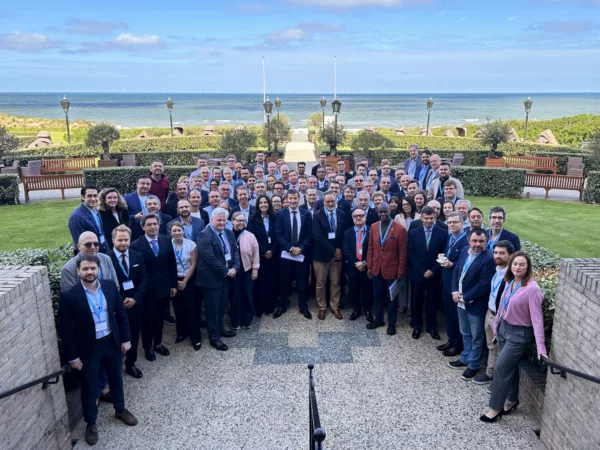
On June 5th, 73 delegates representing 39 European countries or regions attended the EAU Meets National Societies meeting in Noordwijk, the Netherlands. At this annual gathering, the EAU hosts Europe’s national urological societies to discuss current challenges facing urologists, their unmet needs and how to best collaborate to face these issues. The meeting sparked lively debate about the issues that most affect urologists in Europe today and the future of the field.
EAU Secretary General Prof. Arnulf Stenzl (DE) welcomed the delegates who, together, represented 92% of the EAU’s European members, or 63% of its members, globally.
As it stands, the EAU has 23,156 members worldwide, with nearly 16,000 of those in Europe. (Asia makes the next largest group of members, nearly 3200.) The EAU has the ambition to grow to 30,000 members by the end of the decade, making it the go-to partner for the specialty of urology. In order to do so, the EAU has to understand what its member communities want, establish impactful relationships with other societies and stakeholders and have the best toolset for knowledge generation and dissemination in urology.
New set-up
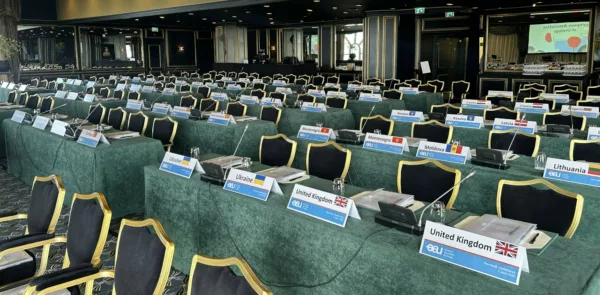
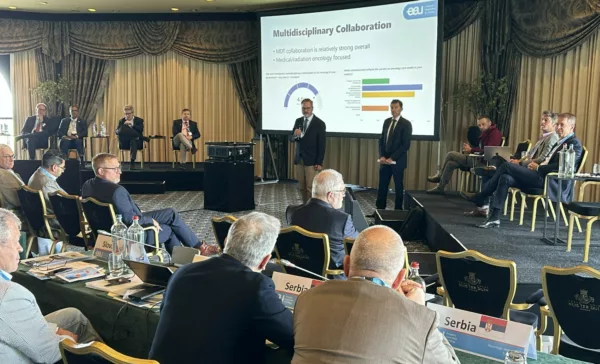
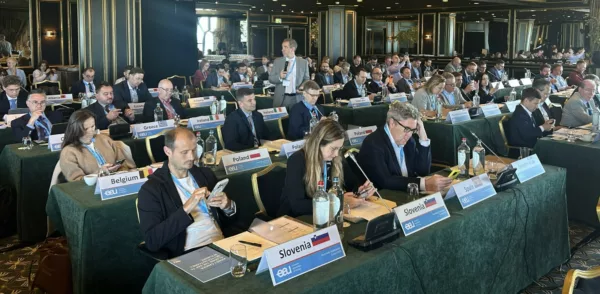
This year saw a new set-up for the meeting. While in the past few years, plenary sessions were followed by rotating break-out sessions, this year all presentations were held in the large sea-view Keizerzaal, but featuring rotating panels of experts and delegates. Seating was arranged by country, with microphones for each delegation. Live voting on issues further encouraged discussion.
The changes were well-received with delegates praising the communal spirit and the ability to hear viewpoints from all across Europe rather than being limited to smaller discussion groups as in previous years. Delegations were encouraged to include young urologists, many of whom were in Noordwijk for the first time. The young representatives often raised points that are uniquely relevant to urologists at the beginning of their careers, like fellowships, getting published, and combining careers with family life.
Urology and Uro-Oncology
A recurring topic at the National Societies meeting is the emergence of the multidisciplinary approach to urological cancers, and the role of the urologist within. Ahead of the meeting, the representatives were polled as to how uro-oncology was classified or trained in their home countries. Of the respondents, 48% reported no dedicated uro-oncology curriculum in their country, while at the same time a sizeable majority would support European accreditation and training in this subspecialty.
Pre-meeting polls and on-site voting also revealed significant variation in prescribing rights and access to advanced therapies across Europe, complicating a unified approach. At the same time there was strong support for a European uro-oncology curriculum. In the discussion and informal polling in the room, Prof. Albers pointed out that as it stands, while multidisciplinary collaboration is relatively strong across Europe, less than 10% of the national representatives had a molecular tumour board in their centre. He pointed out the urgency of the situation: “PARP inhibitors will be replacing ADT, and as urologists we are behind already. We need to be involved, as 50% of the patients who come before the board are urology patients.”
Notably, discussion and voting revealed desire for the EAU taking a lead in setting up a stronger clinical trial infrastructure, a topic that would be returned to in the afternoon.
Subspecialisation across Europe
The next major topic to be addressed concerned subspecialisation within urology. A topic of discussion was what the best time was to start with subspecialisation (already during or only after residency) and this varied largely depending on the size of the country and number of urologists. There was a broad consensus for harmonisation and standardisation of training (with national adaptation).
Much discussion between the panel and the audience followed when it came to the continued relevance of the “general urologist”. On the one hand, there was a need to train general urologists who subsequently specialise, because of how quickly the field was developing and urologists needing a broad orientation to find their strengths. General, in-office urologists are a model in certain countries as well. The counterpoint is that it is relatively inefficient to give every trainee a broad education if they subsequently only perform prostatectomies for the rest of their careers.
Live voting in Noordwijk revealed a high unmet educational need for reconstructive urology, functional urology and particularly andrology and male sexual health. The feeling was that oncology, robotics and so on were represented well in existing training, so more emphasis was desired for these classically urological topics.
One third of the national representatives felt that their national training system alone was not sufficient to guarantee a minimal standard of care in urology. European fellowships were therefore a high on the list of desired priorities for the EAU in the educational field. Nearly three quarters of the representatives voted against the idea of mandatory certification in subspecialised fields.
A European strategy for research and data
The third topic focused on research but beyond clinical research. The audience was first reacquainted with the EAU’s efforts to set up research projects like IMAGINE, PRAISE-U and BCLEAR and translating carefully collected real-world data into policy and clinical practice. EAU Adjunct Secretary General Prof. Jens Sønksen (DK) emphasised the importance of the topic, stating that “research forms the backbone for the strategy that will put us in the driver’s seat.”
While national legal and bureaucratic realities are a clear challenge for those looking to collaborate with patient data, the EAU has been successful in setting up Europe-wide projects that can make a difference to urological care. The Policy Office has also sensitised policymakers to the need of Europe’s urologists and urology patients for further trials and studies.
In the discussions that followed, some delegates pointed out that in many countries, urological research is not a dedicated field or a paid part of the job, it comes purely from self-motivation. This led to an interesting discussion on the nature of the societies that were represented in Noordwijk. In some countries with a strong history of trade unionism or planned economies, a urological society acts as a body that supports urologists’ labour rights and activities. In other regions, urological societies or entities like the EAU have a more scientific character and the ambition to actively advance research and urological care itself.
If not directly conducting research itself, the EAU can facilitate the creating of networks, as it knows the key institutions and other contacts. Hugely useful data is already being generated in daily practice across Europe, including PROMs. The key is to making it easy to harness this data that is already being generated on a local or national scale. The EAU’s UroEvidenceHub is a key tool for harnessing the power of real-world evidence and strengthening the evidence for benefit/risk decisions that urologists face in their daily practice.
Among the representatives there was a clear mandate for the EAU to take the lead in developing this research infrastructure for the continent as a whole.
Walk-in sessions and final remarks
With the three main plenary sessions brought to a close in the early afternoon, delegates were invited to visit four rooms where the EAU’s offices had set up informal meetings. The Patient, Policy, Guidelines and Membership offices gave the opportunity for delegates who were looking to meet the chairs or discuss further collaboration or seek aid in setting up (for example) a national patient office.
In a final round-up of the long and productive day, Prof. Stenzl invited each represented society to sum up their take-home messages and any other feedback they had to the EAU. This raised a largely positive response to the new format, as well as bringing up a few topics that had not covered over the course of the day, like representation within the EAU, or established requirements for international publications to take part in scholarships.
Prof. Sønksen told the audience “we need you. We are not all-knowing, and we are listening and every year we learn so much.”